 |
CCC-Built Rock Structures at Buck Creek Bridge, Box Culvert, Drain Culverts, & Wall |
All Text & Images: Copyright (2026) |
|
CCC-Built Rock Structures at Buck Creek Bridge, Box Culvert, Drain Culverts, & Wall |
All Text & Images: Copyright (2026) |
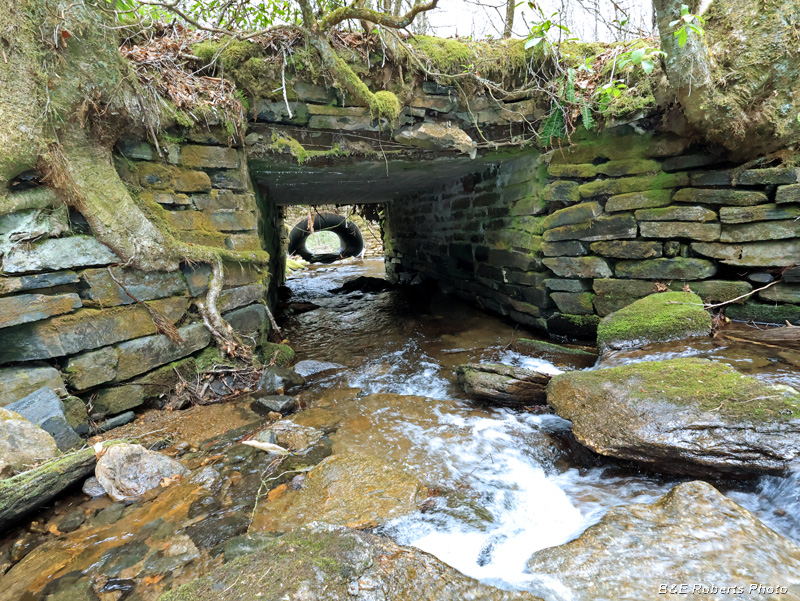
| BACKGROUND: In 1999, a proposal was submitted to replace a bridge on FS Road 350 in the Buck Creek area of Clay County. The bridge had been inspected and deemed unsafe for vehicular traffic. A heritage resource survey was conducted for the proposed bridge replacement, and from historic documentation and oral information, it was concluded that the bridge had been built by members of the nearby African-American CCC camp in the early 1930s. (See my related page on the remains of the Nathaniel Greene / Buck Creek CCC Camp F-12.) During field survey of the area, one stone box culvert, and 78 smaller metal culverts with stone headwalls were also noted along the road. In addition, a 60 foot section of a stone retaining wall was discovered. All appear to be similar in age and style to the stone work used on the bridge. The new bridge location was moved slightly downstream, so that the historic bridge could be left in place. Even after 90+ years of use, maintenance, and minor re-routes, one can still view some of the old CCC rock work. |
|
 |
|
| The CCC-built stone bridge, no longer in use, from the upstream side. The ca. 2001 replacement bridge is visible downstream through the opening. |
|
 |
|
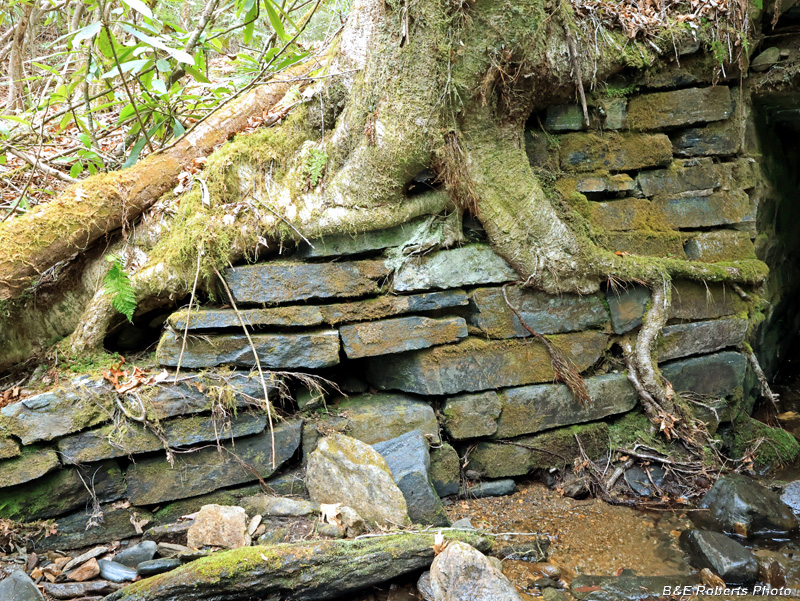
| Tree roots latched onto the left-hand stone wing wall of the old bridge. |
|
 |
|
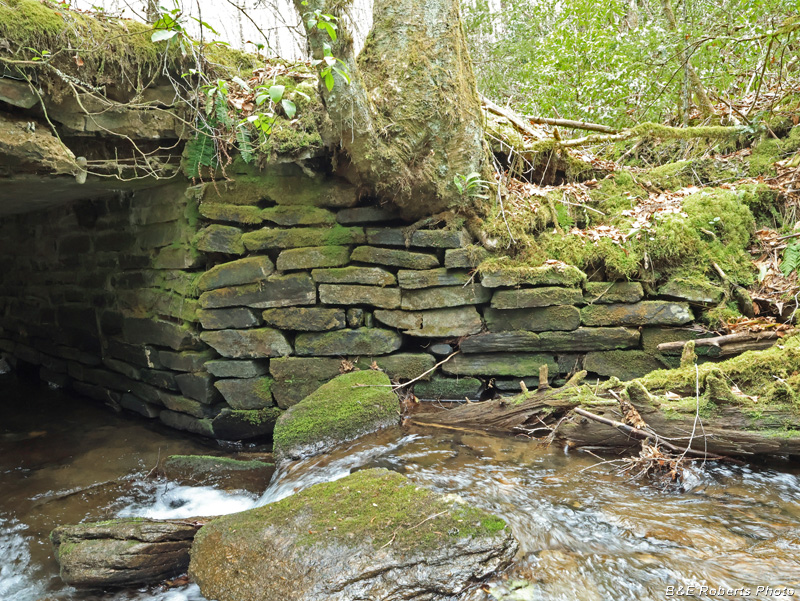
| Right-hand wing wall. |
|
 |
|
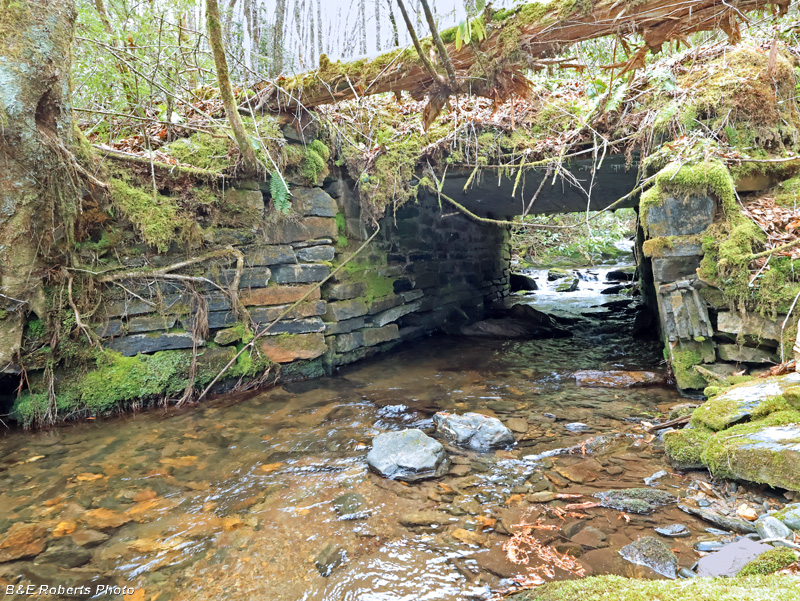
| Old stone bridge, looking upstream from the outflow side. |
|
 |
|
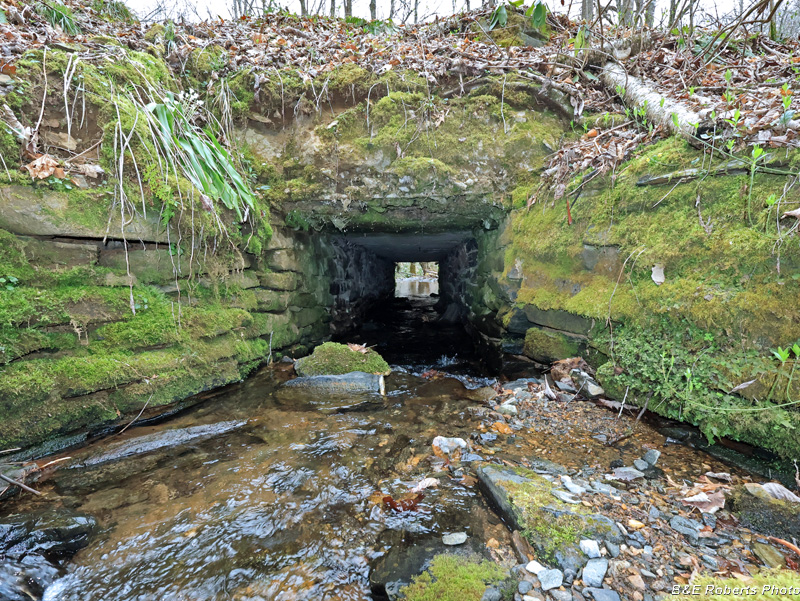
| The box culvert, on a different creek branch, shows similar construction to the bridge, but on a smaller scale. This is the view downstream through the culvert. |
|
 |
|
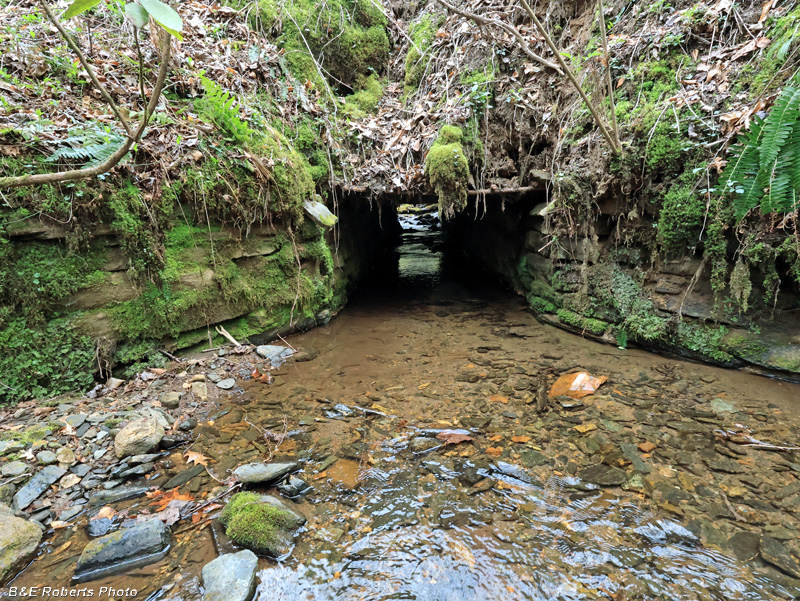
| View upstream through the box culvert. |
|
 |
|
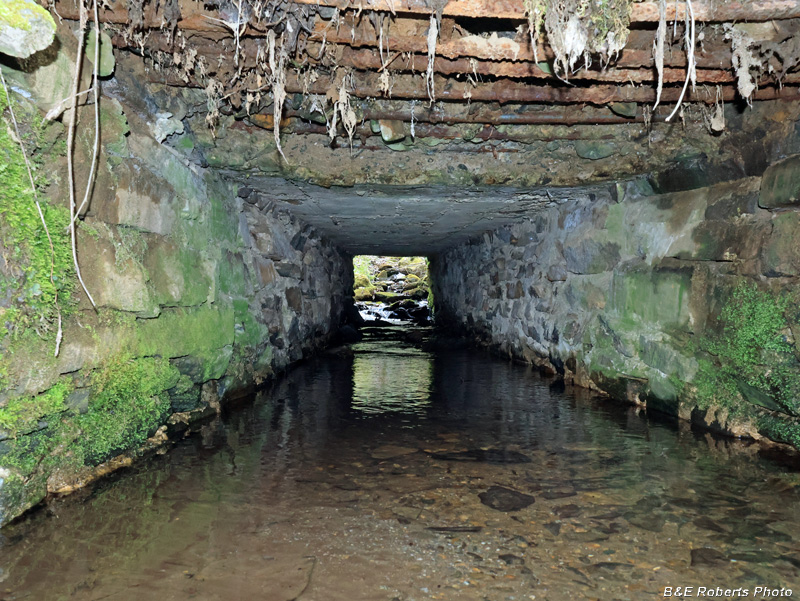
| Closer view through the rock box culvert. The rock appears to have been shaped, and according to local informants, was quarried locally. |
|
 |
|
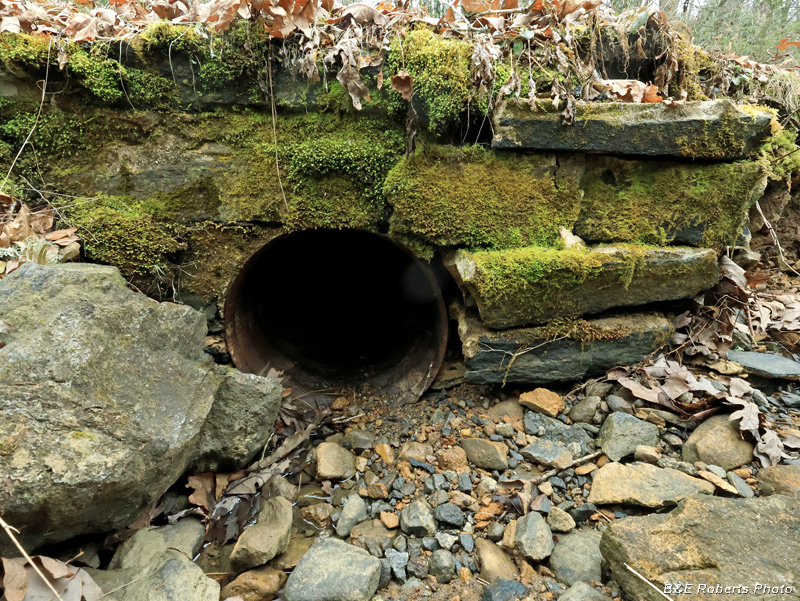
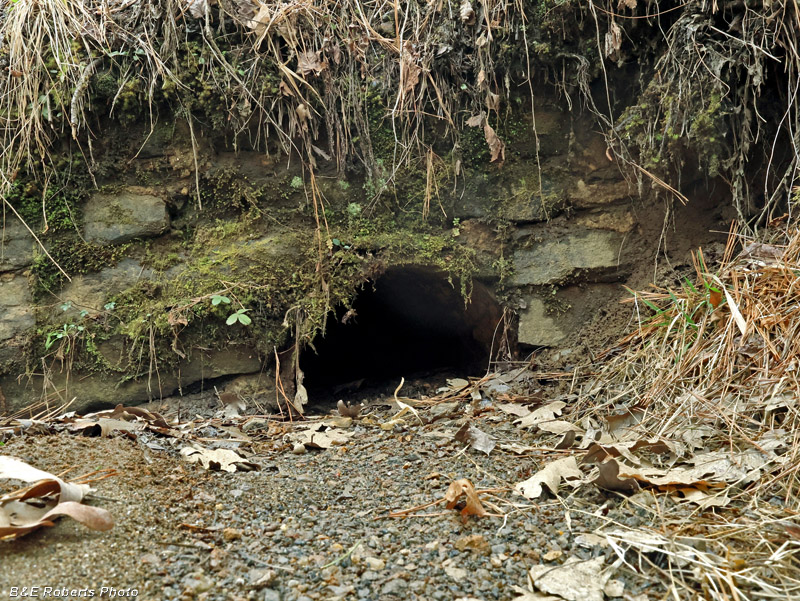
| Above and following are examples of the numerous original CCC metal culverts with stone headwalls that remain here. |
|
 |
|
| Somewhat silted in... |
|
 |
|
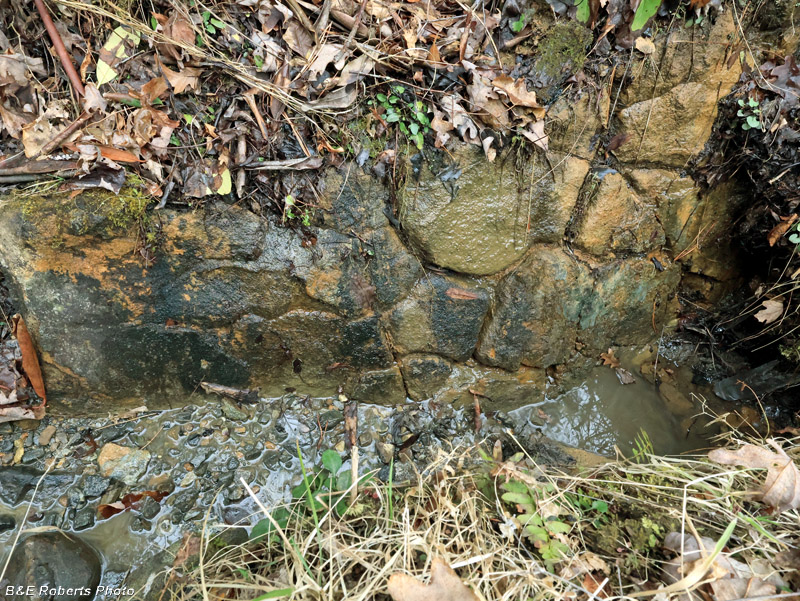
| Most of the culverts had single headwalls but some had additional stone channel lining and/or corner walls. |
|
 |
|
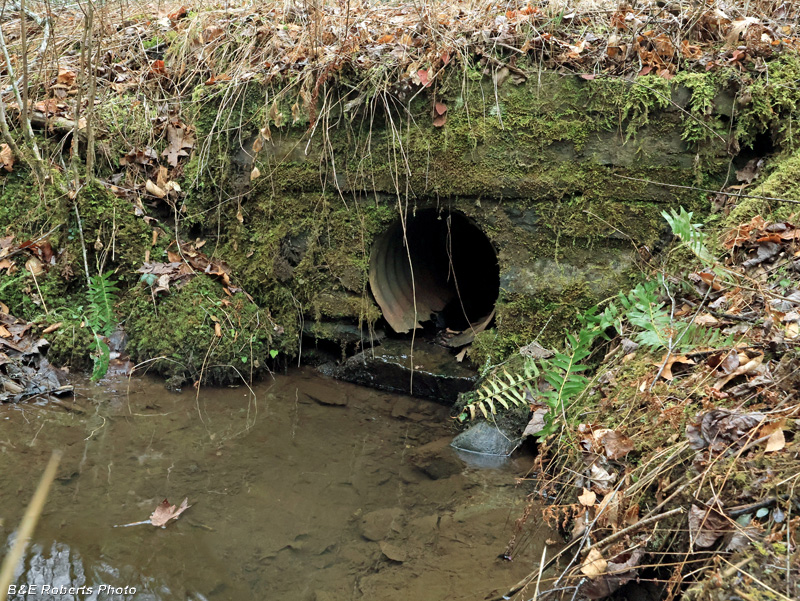
| Another of the typical single headwalls. The headwalls in the best shape still have their original metal culvert pipes. Where these pipes have been replaced, the stones were re-assembled afterwards, but aren't as well formed as the original structures. |
|
 |
|
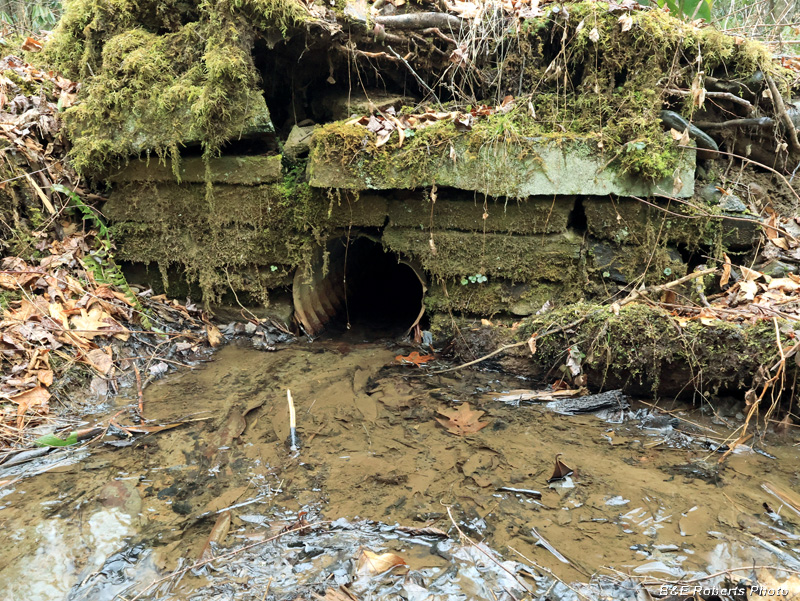
| An uprooted tree atop the headwall has disturbed the rock structure here. |
|
 |
|
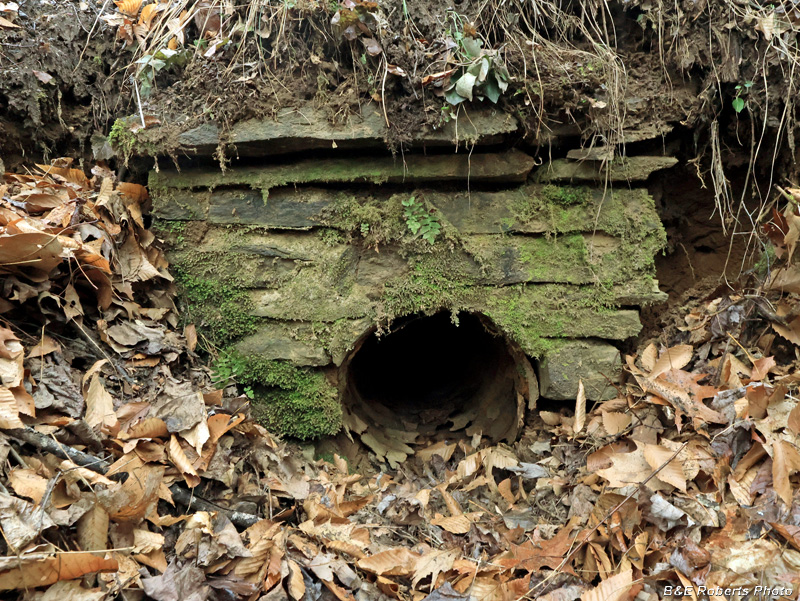
| One more CCC-built culvert structure. These are just a few of the many that can still be seen after 90 years. |
|
 |
|
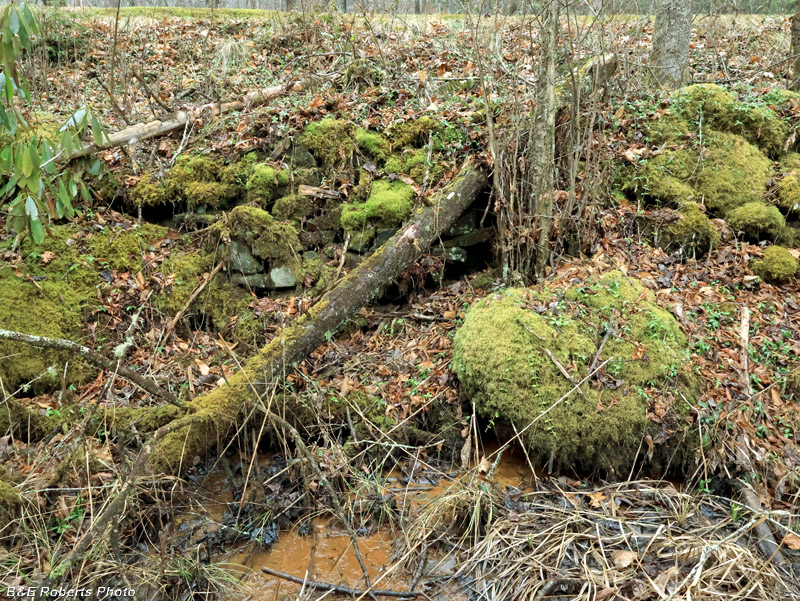
| Remains of old rock retaining wall that supported the original road in an area that was later slightly rerouted. |
|
 |
|
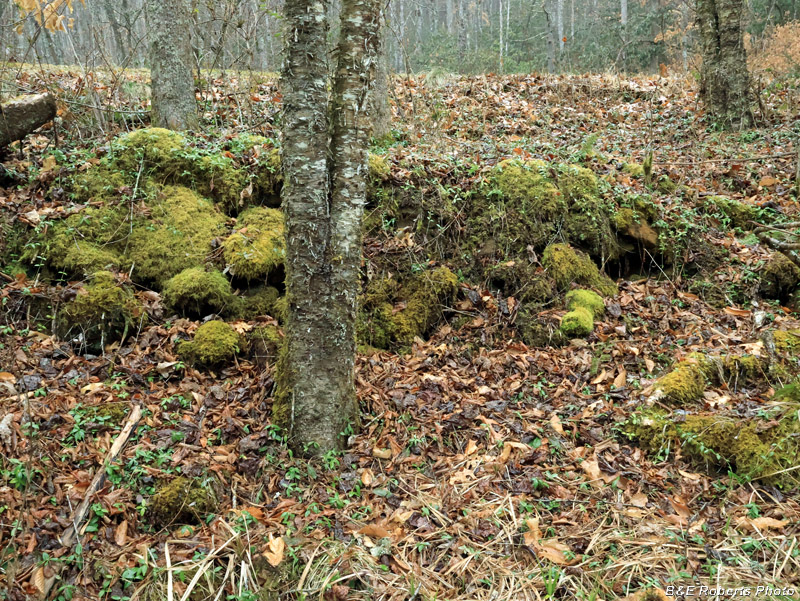
| Another section of the old retaining wall |
|
 |
|
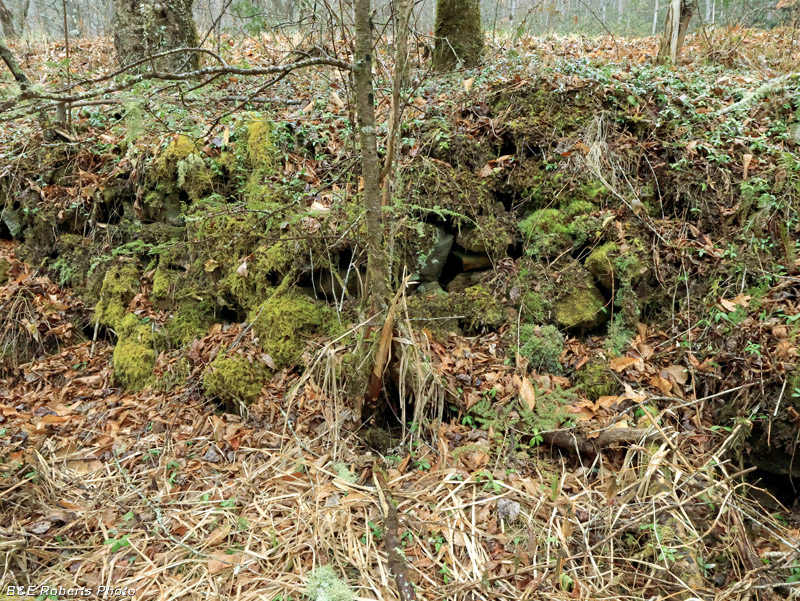
| More of the rock retaining wall. The retaining wall consists of what appears to be a mixture of dumped and stacked stone. The stone is rough, not cut like the stone used in the bridge and culverts. |
|
 |
|
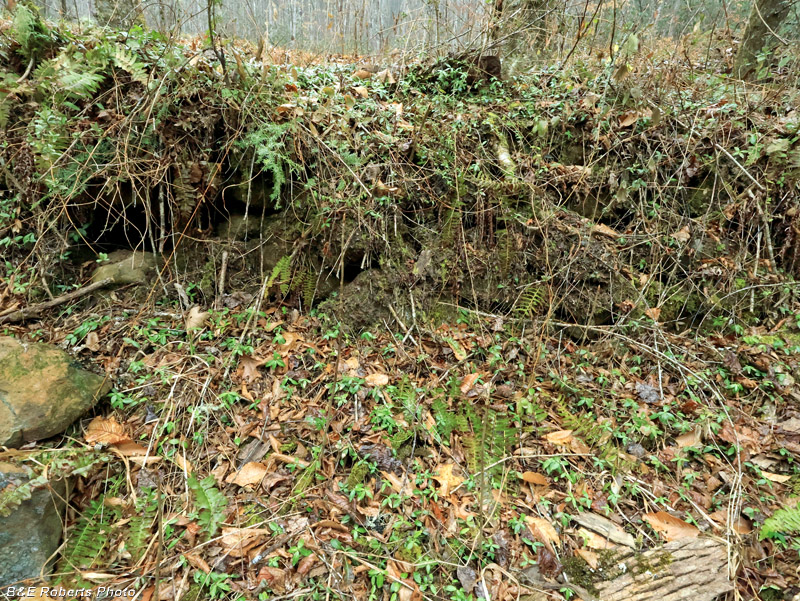
| Overgrown, but one final section of the old road retaining wall. The wall is 60 feet long and 3-4 feet high. |
|
 |
|
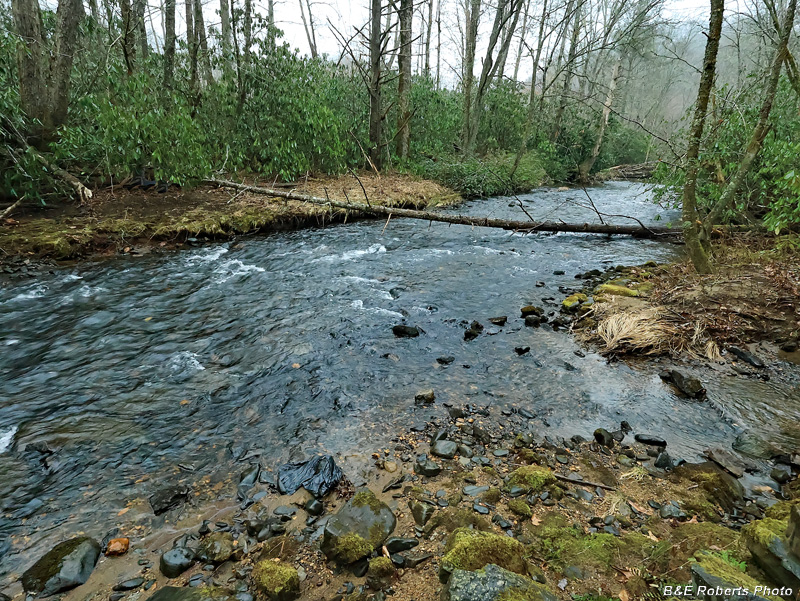
| Buck Creek |